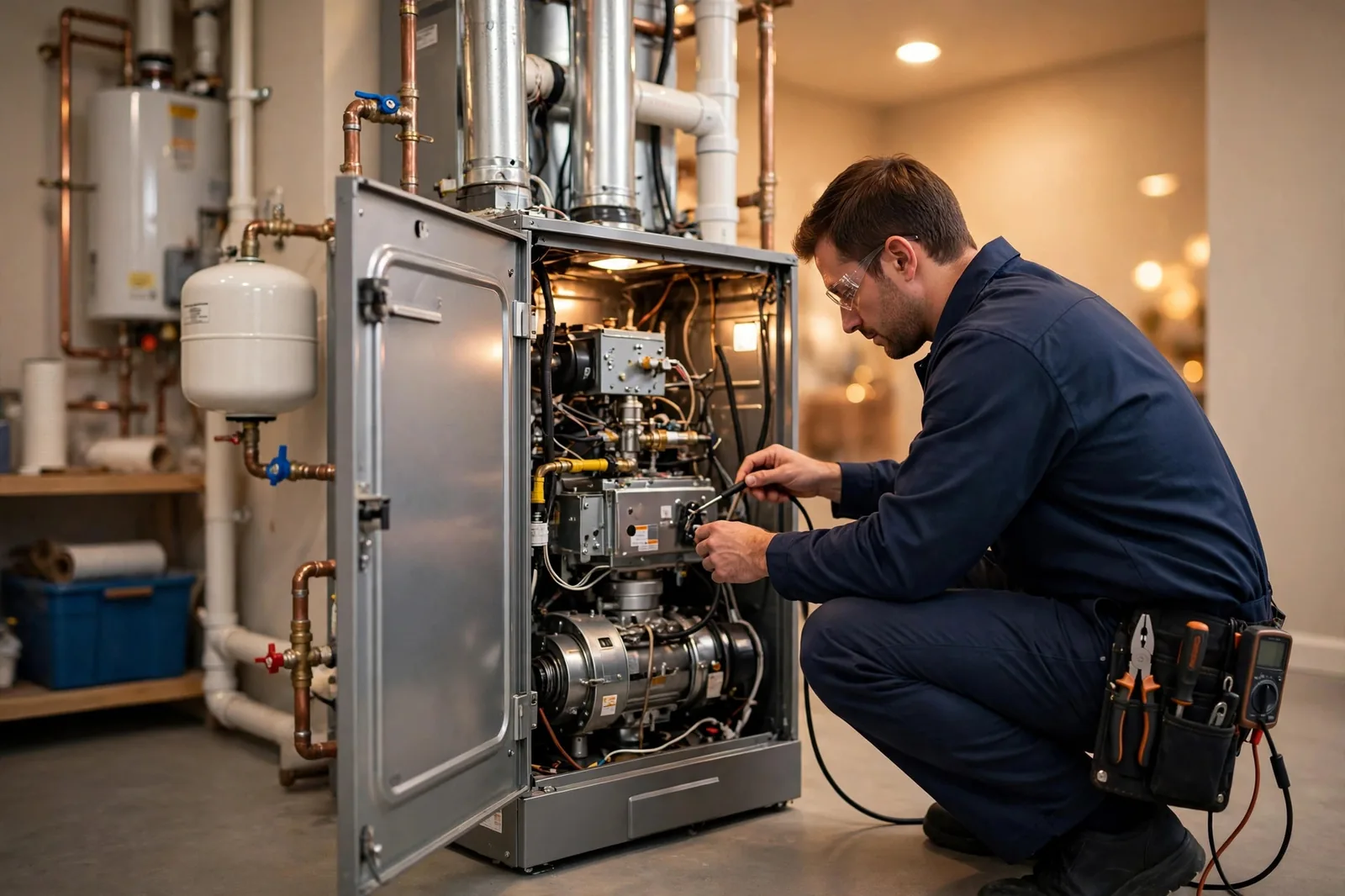
Emergency Furnace Repair in Mt. Helix, CA
The Mt. Helix summit neighborhoods sit above the surrounding valley, catching cooler air and stronger winds on winter nights. Homes on the slopes often have split-level layouts where heat distribution is the real challenge: warm downstairs, chilly bedrooms. FurnaceGuard La Mesa connects Mt. Helix homeowners with independent contractors who diagnose both the furnace and the airflow delivering its heat.
If some rooms never warm up or the furnace runs constantly without satisfying the thermostat, the problem may be distribution as much as equipment. Call (619) 939-1577 and describe the pattern; the diagnosis will cover the full system.
Common Calls From Mt. Helix
- No-heat emergencies on cold East County nights
- Gas furnace ignition and flame sensing failures
- Electric furnace heat strip and sequencer problems
- Thermostat misreads and short cycling
- Seasonal tune-ups before the heating season
ZIP Codes Served
Neighborhoods We Serve in Mt. Helix
Mt. Helix is the landmark of East County: a prominent peak crowned by a park, an amphitheater, and a memorial cross visible for miles. The neighborhoods on its slopes are some of the most distinctive in our service area, and their heating challenges are unlike anywhere else we work.
The summit neighborhoods, clustered around Mt. Helix Drive near the park entrance by Vivera Drive, occupy the highest residential ground in the area. The views stretch from downtown San Diego to the Cuyamaca Mountains, and the exposure is total: wind from every direction, cooler nights than the valley floor, and rapid temperature drops after sunset. Homes here are predominantly custom and mid-century modern, many designed around the panorama with extensive glass. The slopes below the summit hold more conventional hillside streets, where split-level homes are the dominant form. Split-levels are notoriously tricky to heat evenly: the upper level overheats while the lower level stays cold, and homeowners often blame the furnace for what is really a distribution problem.
What makes Mt. Helix unique for heating is the combination of elevation, exposure, and architecture. The elevation cools the nights. The exposure multiplies heat loss through wind. And the glass-heavy, open-plan architecture of the view homes maximizes that loss. A furnace on Mt. Helix can work significantly harder than the same model in sheltered La Mesa, which means shorter part life and more frequent maintenance needs. The winding hillside streets also mean longer drive times, which is why we prioritize no-heat calls from the mountain and keep our routing tight on cold nights.
We serve all of Mt. Helix, including ZIP code 91941, from the summit streets to the lower slopes. Call (619) 939-1577. Mountain heating is our specialty, and we will get your system diagnosed properly.
Mt. Helix Weather and Your Furnace
If you live on Mt. Helix, you already know your weather is different. Your furnace knows it too.
The regional baseline is semi-arid steppe: December and January daytime highs around 65 to 66 degrees, nighttime lows from 44 to 50 degrees, with the coldest nights dipping into the mid-30s. On the mountain, those numbers skew colder. Elevation lifts the neighborhoods above the valley's pooled warmth, and the exposed slopes catch every breeze. On clear, still nights, the summit can run several degrees cooler than La Mesa below, and the wind chill on the skin is matched by the heat loss from the house. Annual rainfall is about 12 inches over roughly 261 sunny days, and August peaks near 83 degrees, but the mountain's summer advantage, cooler breezes, reverses in winter when those same breezes steal heat.
The heating math on Mt. Helix is unforgiving. Wind increases a home's heat loss dramatically, and the view homes with their walls of glass lose heat fastest of all. The furnace compensates with longer run times and more frequent cycles, and every additional cycle wears the igniter, the blower motor, and the relays a little more. Dust is a constant companion on the exposed slopes, coating flame sensors and burners between service visits. Santa Ana winds in the fall are felt here first and strongest, driving debris into venting and combustion air intakes. Then winter arrives, and the mountain's furnaces face the longest, hardest heating season in our service area.
Mountain homes need mountain-grade maintenance: annual service at minimum, with attention to venting, combustion air, and the distribution system that split-level layouts complicate. Our technicians understand elevation effects and will tell you honestly what your system is up against. Schedule before winter and we will make sure your furnace is ready for the mountain cold.
Homes and Heating Systems in Mt. Helix
Mt. Helix homes were built for the view, and the heating systems are often an afterthought to the architecture. That mismatch is where most of our mountain calls originate.
The custom view homes near the summit frequently have complex heating setups: zoned systems with multiple thermostats, high-efficiency furnaces, sometimes radiant or supplemental heat for the glass-heavy living areas. These systems can work beautifully when designed and maintained well, and they can be miserable when they are not. The most common mountain complaint is uneven comfort: one level roasts while another shivers. This is almost always a distribution and zoning issue rather than an equipment failure, and it requires a technician who will test airflow room by room instead of just staring at the furnace.
The split-level homes on the mid-slopes have their own pattern. Typically heated by a single standard gas furnace, they suffer from the physics of their layout: heat rises, so the upper bedrooms overheat while the lower family room stays cold. Homeowners respond by cranking the thermostat, which overheats the top, overworks the furnace, and satisfies nobody. The fixes are in the distribution: balancing dampers, return air improvements, and sometimes zoning. The licensed contractors in our network diagnose the whole house as a system, not just the box in the closet, which is the only approach that actually solves mountain comfort problems.
If your Mt. Helix home has never heated evenly, or if your furnace runs constantly without satisfying the thermostat, give us a call. Describe the pattern across your levels and we will send someone who understands hillside distribution.
When Mt. Helix Homeowners Call Us Most
The mountain gets winter first and holds it longest, so the smart money acts earliest.
September and October are the prime months on Mt. Helix. The heating season approaches faster here than in the valleys, and early service means open schedules and a system verified before the first cold snap. This is also the time to address distribution issues: if last winter brought uneven comfort across your levels, fall is the moment to have the airflow tested and balanced. November through February is the long mountain winter. Sustained cold, persistent wind, and long furnace run times test every part of the system, and this is when we see the most failures: worn blower motors, cracked igniters, and control issues from heavy cycling.
March and April ease off, but the mountain holds its chill later than the valleys, so late-season failures are common. Summer is the project season: zoning upgrades, ductwork improvements, and system replacements, all scheduled without weather pressure. Whatever the season, call (619) 939-1577. We climb the mountain every week, and we will get your heat right.
Solving the Split-Level Puzzle on Mt. Helix
The most common heating complaint on Mt. Helix is not a broken furnace. It is a working furnace that heats the house unevenly, and the fix is almost never a new furnace.
Split-level homes dominate the Mt. Helix slopes, and their physics fights even heating. Warm air rises, so the upper bedrooms collect heat while the lower family room stays cool. The thermostat, usually mounted on one level, reads only its own location, so it satisfies and shuts off the system while other levels are still cold, or it calls endlessly because the lower level never warms. Homeowners try the obvious fix, raising the setpoint, which overheats the upper level, overworks the furnace, and leaves the lower level merely less cold. Nobody is comfortable and the equipment suffers.
The real solutions live in the distribution system. Balancing dampers in the ductwork can redirect more warm air to the starved lower level. Return air improvements, adding or enlarging returns on the cold level, help the system sense and serve the whole house. In some cases, zoning with multiple thermostats and motorized dampers gives each level independent control, which is the correct engineering answer for a split-level. None of these involve replacing a working furnace, and all of them cost less than the energy wasted by an unbalanced system over a few winters.
Diagnosing distribution problems requires a different approach from diagnosing equipment failures. Our technicians measure airflow and temperature at multiple registers, check static pressure, and map how heat actually moves through your home before recommending anything. If your Mt. Helix home has never heated evenly, the answer is probably in the ducts, not the furnace. Call (619) 939-1577 and ask for an airflow and distribution evaluation. We will find where your heat is going.
Find Us From Anywhere
Maps and Directions for Mt. Helix
Coming from the airport, riding the trolley, or driving over from anywhere in the county, these maps show the way to Mt. Helix. Our technicians run the same routes every day.
In Mt. Helix and need heat tonight? Call now. Call (619) 939-1577
Call NowNearby Service Areas
Helpful Furnace Guides
Mt. Helix Furnace Repair: Common Questions
What Mt. Helix homeowners ask before booking a furnace visit.
Ask by PhoneHow fast can you reach Mt. Helix?
No-heat calls get priority scheduling across our East County routes. Call (619) 939-1577 and you will get the next available window for Mt. Helix and the surrounding area.
Do you service both gas and electric furnaces in Mt. Helix?
Yes. Our network's independent contractors diagnose and repair gas furnaces, electric furnaces and air handler systems, plus thermostats and controls.
What does the diagnosis include?
Testing the full heating sequence: thermostat call, power and safeties, ignition, flame sensing and airflow. You get the findings explained and a written plan before any work begins.
Can I schedule maintenance before winter?
Yes, and fall is the best time. A tune-up cleans burners and flame sensing, tests the blower and safeties, and verifies carbon monoxide safety before the heating season.
Need Furnace Repair in Mt. Helix?
Call FurnaceGuard La Mesa at (619) 939-1577 and get the diagnosis scheduled.