Why Your Furnace Keeps Turning On and Off
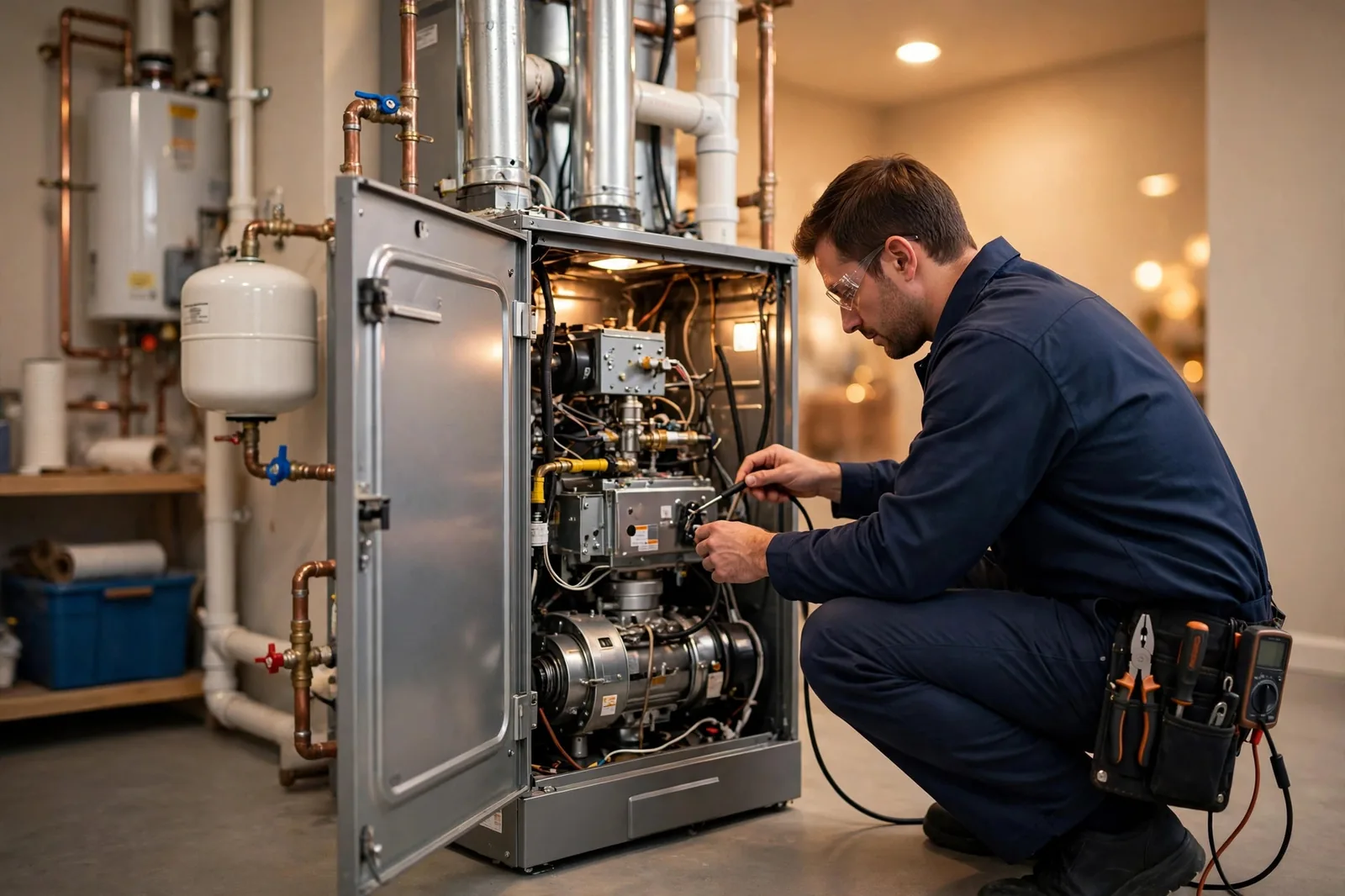
Short cycling, when your furnace starts and stops every few minutes, is most often caused by overheating from a clogged filter, a faulty flame sensor, or an oversized furnace. Start with a fresh filter. If the cycling continues, the furnace needs professional testing to find the failing component.
Short cycling is the furnace equivalent of sprinting ten yards, stopping, and sprinting again: the system starts, runs a few minutes, shuts off, then starts again long before the house is comfortable. It is uncomfortable, inefficient and hard on equipment. The causes range from a five-minute filter change to an oversized furnace, and telling them apart is a matter of observation plus testing. Here is how to think about it.
What Short Cycling Looks Like
A healthy heating cycle runs long enough to bring the house to temperature, then rests. Short cycling compresses that into rapid repeats: burners on for three to eight minutes, off for a few, on again. You will notice rooms never quite warming up, the furnace seemingly always starting or stopping, and energy use climbing because startup is the least efficient part of any cycle. If you time it, cycles under ten minutes with the thermostat still calling for heat are the signature.
Cause 1: Restricted Airflow
The most common cause is also the easiest to fix. A clogged filter, closed vents in unused rooms, or a return grille blocked by furniture chokes airflow across the heat exchanger. Temperatures inside climb until the limit switch, a safety device, trips and shuts the burners down. The blower keeps running, the exchanger cools, the switch resets, and the burners relight: the classic short cycle. Replace the filter, open the vents and returns, and see if cycles lengthen. If they do, you found it. If a clean filter and open vents do not help, the restriction may be deeper: a dirty blower wheel, collapsed duct or undersized return, all of which need hands-on diagnosis.
Cause 2: Thermostat Problems
The thermostat tells the furnace when to run, and a confused thermostat produces confused cycling. Miscalibration makes it satisfy too early; bad placement near a sunny window, a drafty door or a supply register makes it read a temperature that is not the room's; and a failing thermostat can simply send erratic signals. Heat anticipator settings on older models also matter. If cycling started after a thermostat change, or the thermostat's reading clearly disagrees with the room, suspect the control before the furnace.
Cause 3: Overheating Components
Beyond filters, several faults overheat the system into limit trips: a failing blower motor running slow, a blower wheel caked with dust, or a heat exchanger partially blocked. The pattern is distinctive: the furnace runs, the supply air gets very hot, then everything shuts down abruptly. These need professional diagnosis because they involve the blower assembly and heat exchanger directly.
Cause 4: Oversized Equipment
A furnace with too much capacity for the house blasts heat, satisfies the thermostat in minutes, and shuts off, then repeats. This has usually been true since installation day. Oversizing also causes temperature swings and poor humidity control. Confirmation takes a heating load calculation; remedies range from control adjustments to equipment replacement in severe cases. It is worth knowing because no repair fixes a sizing problem.
What to Do About It
Start with the homeowner steps: fresh filter, open vents and returns, thermostat set correctly and reading accurately. If short cycling persists past those, call (619) 939-1577. The diagnosis will measure temperature rise, check static pressure and airflow, test the thermostat and inspect the blower, and the fix will target the actual cause rather than the symptom. Left alone, short cycling does not improve;
Short Cycling in Newer High-Efficiency Furnaces
High-efficiency condensing furnaces add their own short-cycling triggers. Blocked condensate drains can trip safety switches and shut the system down mid-cycle; the furnace restarts, runs until the trap backs up again, and repeats. Blocked intake or exhaust pipes, sometimes from nests or debris at the exterior terminations, trip pressure switches the same way. If your high-efficiency furnace short cycles, check that the condensate line drains freely and the exterior vent terminations are clear before suspecting anything deeper.
The One Test That Rules Out Half the Causes
There is a simple observation that narrows the field fast: watch a full cycle and note the supply air temperature. If the air gets very hot before shutdown, the furnace is overheating into a limit trip, which points to airflow: filter, blower, ducts. If the air never gets properly warm before shutdown, the problem is on the heating side: ignition, flame sensing, gas supply or controls. That single distinction, hot-then-off versus never-hot, tells the technician which half of the system to investigate first.
it wears out the parts it stresses until one of them fails completely.
When Short Cycling Damages the Heat Exchanger
There is a reason short cycling deserves prompt attention beyond comfort and energy waste: it punishes the heat exchanger. Every startup sends a wave of thermal expansion through the metal, and rapid cycling multiplies those stress events per season. Over time, the added fatigue can crack exchangers years earlier than normal cycling would. This is the hidden cost of ignoring short cycling: what starts as an annoyance becomes a safety issue. If your furnace has been short cycling for a season or more, mention it specifically when you schedule service so the heat exchanger gets a careful look.
Frequently Asked Questions
Is short cycling damaging my furnace?
Yes. Every startup is the hardest wear a furnace sees: thermal stress on the heat exchanger, inrush current on motors. Frequent cycling accelerates wear on ignition parts, motors and controls.
Can a dirty filter really cause short cycling?
Absolutely, and it is the most common cause. Restricted airflow overheats the heat exchanger, the limit switch trips, the burners shut off, the exchanger cools, and the cycle repeats every few minutes.
How do I know if my furnace is oversized?
An oversized furnace satisfies the thermostat in very short bursts even with clean filters and good airflow, often since installation. A load calculation confirms it; correction may mean equipment changes or control strategies.
Need Help With Your Furnace?
If this guide describes what your furnace is doing, the next step is a professional diagnosis. Call (619) 939-1577 and describe the symptoms; FurnaceGuard La Mesa will match you with an independent contractor and schedule the visit.