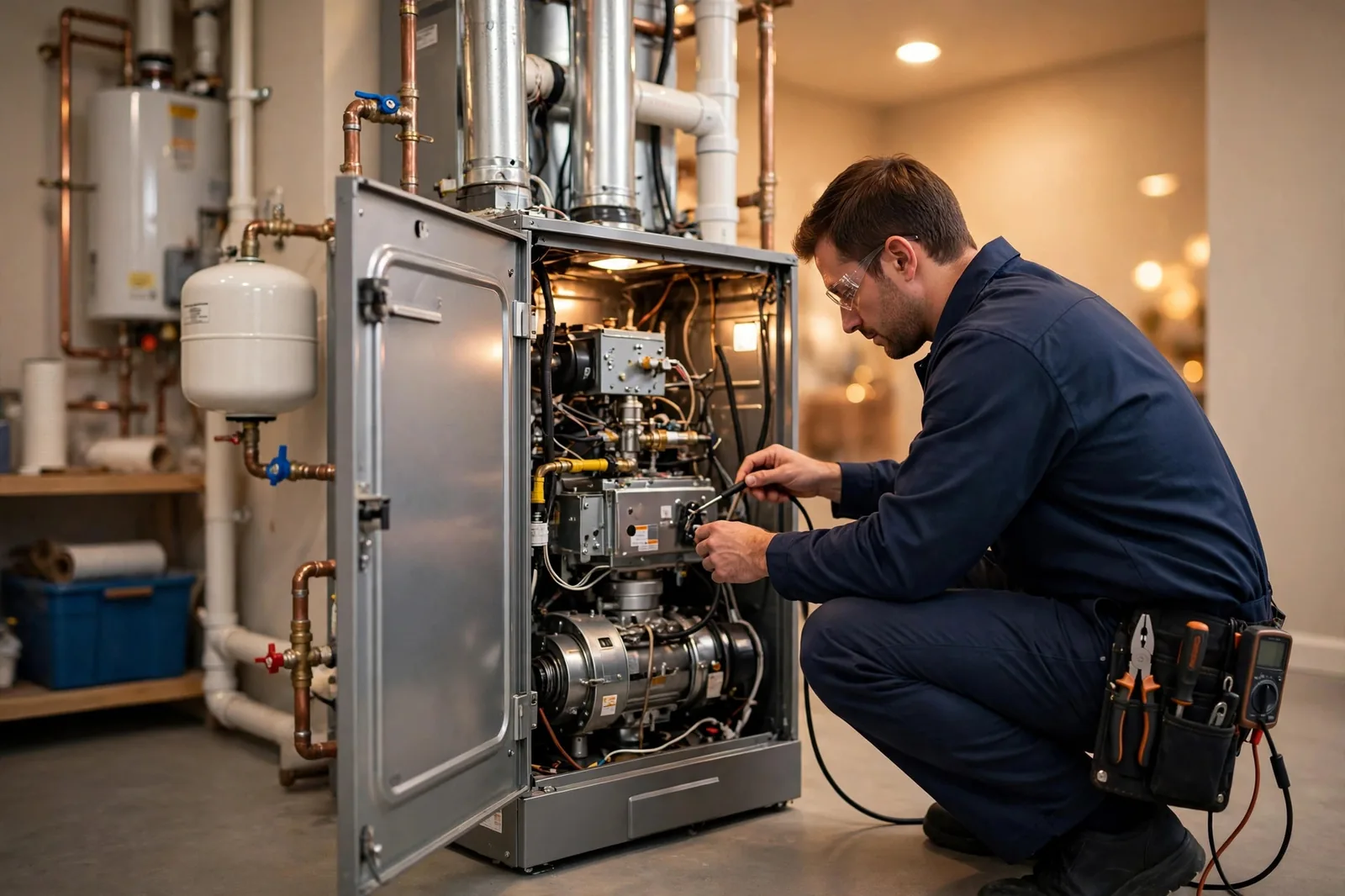
Emergency Furnace Repair in El Cajon, CA
El Cajon sits just east of La Mesa, and our daily routes run straight up Fletcher Parkway and the surrounding corridors. The housing mix here mirrors La Mesa's: post-war ranch homes with original gas furnaces, newer builds with modern equipment, and plenty of systems that only get attention when they quit. FurnaceGuard La Mesa connects El Cajon homeowners with independent contractors for diagnosis, repair, installation and tune-ups.
Winter nights in the valley run a few degrees colder than the coast, which is when neglected igniters and flame sensors give out. If your furnace will not start, blows cold air or cycles constantly, call (619) 939-1577. You will get a priority window, a step-by-step diagnosis and a written plan before any work starts.
Common Calls From El Cajon
- No-heat emergencies on cold East County nights
- Gas furnace ignition and flame sensing failures
- Electric furnace heat strip and sequencer problems
- Thermostat misreads and short cycling
- Seasonal tune-ups before the heating season
ZIP Codes Served
Neighborhoods We Serve in El Cajon
El Cajon is the largest city in our service area, and its neighborhoods could hardly be more different from one another. A furnace that hums along in a sheltered central El Cajon courtyard can struggle on an exposed Bostonia hillside or in the colder inland air east of town. We route our East County technicians through El Cajon every day, and we know which streets run which equipment.
In the west, the Fletcher Hills border along Fletcher Parkway is classic established suburbia: tree-lined streets, rolling hills, and well-kept single-family homes, many dating to the 1960s through the 1980s. Furnaces here are often original to the house or on their second replacement, and the most common calls involve aging gas furnaces with worn igniters and tired blower motors. Just south, the corridors around Grossmont College on Grossmont College Drive mix residential streets with student rentals, where wall furnaces and older packaged systems still show up in converted properties.
Central El Cajon around Main Street, Broadway, and Magnolia Avenue is denser and older. The housing stock includes post-war bungalows and small apartment buildings where compact furnaces and wall heaters do the work. Bostonia, to the north in the 92021 area, is one of the oldest settled parts of town, with many homes built between the 1940s and the 1960s. Those original-era gas furnaces are long gone in most cases, but their replacements are now aging out themselves, which keeps our diagnostic schedule busy. Farther east, Granite Hills climbs into rockier, more exposed terrain where winter nights bite harder and wind finds every gap in an older home. To the south, the Rancho San Diego border brings newer planned-community homes with modern high-efficiency equipment that mostly needs maintenance rather than rescue.
We serve every El Cajon neighborhood, including ZIP codes 92019, 92020 and 92021. If your street is not named here, call (619) 939-1577 and ask. Our dispatch covers the full city daily.
El Cajon Weather and Your Furnace
El Cajon sits deeper inland than La Mesa, and that inland position is the single biggest factor in how hard local furnaces work. Winter nights here run a few degrees colder than in La Mesa proper, which means more heating cycles, longer run times, and more stress on every part of the system.
The regional pattern is a semi-arid steppe climate. Across the area, winter daytime highs in December and January sit around 65 to 66 degrees, with nighttime lows from 44 to 50 degrees. The coldest winter nights dip into the mid-30s. El Cajon, being farther from the marine influence, feels the cold end of that range more often than La Mesa does. About 12 inches of rain falls in a typical year, spread across roughly 261 sunny days, and the hottest month is August with highs around 83 degrees. In other words, the furnace gets a short, real winter workout and then sits idle through a long, hot summer.
That long idle summer is the quiet killer. From May through October, most El Cajon furnaces never fire. Dust settles on burners and flame sensors, condensate traps dry out, and small issues like a weakening igniter or a sticking gas valve go unnoticed. Then the first genuine cold snap of December arrives, every furnace in the neighborhood fires at once, and the weak links fail in the same week. This is why fall tune-ups matter so much here: a technician can catch the dusty flame sensor or the cracked igniter in October instead of discovering it at midnight in January. Santa Ana winds in the fall add another wrinkle, driving dust and debris into outdoor equipment and rooftop units. And in the eastern neighborhoods like Granite Hills, the extra few degrees of nighttime cold plus hillside wind exposure mean the furnace cycles more often, which accelerates wear on the parts that cycle with it.
If your furnace has been silent since spring and the first cold night is coming, give us a call before the rush. A preseason check is the cheapest insurance a furnace can get.
Homes and Heating Systems in El Cajon
El Cajon grew in waves, and each wave left a different heating system behind. Knowing which wave your house belongs to tells you a lot about what your furnace is likely to do next.
The oldest wave, the post-war bungalows and ranch homes of central El Cajon and Bostonia, went up in the 1940s through the 1960s. Many still heat with gas furnaces, though usually not the originals. The replacements installed in the 1980s and 1990s are now reaching the end of their service life, which is why we see so many calls from these neighborhoods for systems that run constantly, blow lukewarm air, or quit entirely. Common culprits are failed hot-surface igniters, worn blower motors, and control boards with cracked solder joints from decades of heat cycling. Ductwork in these homes is often original too, with leaks and crushed runs that starve distant rooms of heat.
The second wave, the Fletcher Hills subdivisions and the neighborhoods south toward Rancho San Diego, mostly dates to the 1960s through the 1980s. These homes typically have standard gas furnaces in garages or closets, and the dominant pattern is deferred maintenance: the system worked fine for years, nobody serviced it, and then a single part failed under load. Flame sensors coated in oxidation, clogged condensate drains, and dirty blower wheels are the usual findings. The newest wave, the planned communities near the Rancho San Diego border, runs modern high-efficiency condensing furnaces with PVC venting. Those systems are reliable but not maintenance-free: they need their condensate traps cleared, their intake pipes checked for blockages, and their filters changed on schedule. Across all three waves, one thing is constant: electric furnaces and heat-pump air handlers appear in pockets, especially in converted apartments and additions, and they fail differently, with sequencers and heat strips rather than igniters and gas valves.
Whatever wave your home belongs to, our technicians diagnose the full heating sequence before recommending anything. Describe what your system is doing when you reach out, and we will match you with a contractor who knows El Cajon housing stock.
When El Cajon Homeowners Call Us Most
Furnace calls in El Cajon follow the weather with remarkable loyalty. Once you see the pattern, you can get ahead of it.
October and November bring the preseason wave. Homeowners who remember last winter's close call schedule tune-ups, and smart ones do it before the first cold snap rather than after. This is the ideal window: technicians have open schedules, parts are on the shelf, and a cleaning now prevents a midnight failure later. December and January are the emergency season. When nighttime lows drop into the 40s and the coldest nights dip into the mid-30s, every marginal igniter, flame sensor, and blower motor in the city gets tested at once. No-heat calls spike, especially from Bostonia and the eastern neighborhoods where the cold hits hardest. February and March bring the late-season failures: systems that survived January on a weakening part finally give out, and homeowners who limped through winter decide to plan a replacement before next year.
Summer is the quiet season for repairs but the right season for replacements. If your furnace is over fifteen years old and needed a repair last winter, getting the replacement conversation done in July means no pressure, no cold house, and a system ready for December. Whenever you call, you will reach a real person who schedules a real diagnostic visit. That number is (619) 939-1577.
Why El Cajon Keeps Our Technicians Busy
El Cajon generates more furnace calls than any other city we serve, and the reason is simple arithmetic: more homes, older homes, and colder nights than the coastal cities.
Scale matters. With three full ZIP codes and neighborhoods ranging from dense central blocks to sprawling hillside streets, El Cajon has more furnaces than anywhere else in our service area, and a large share of them are in the age window where components fail. An igniter that lasts fifteen years will fail in year sixteen regardless of brand, and El Cajon has thousands of systems sitting in that window right now. Add the inland cold, which makes every system work harder than its coastal equivalent, and you get the highest call density we see.
What this means for you is practical: we staff El Cajon heavily. Our technicians run dedicated East County routes that pass through the city every day, our trucks carry the parts that El Cajon systems most often need, and our dispatchers know the neighborhoods well enough to route efficiently. When you call (619) 939-1577 from El Cajon, you are calling the city we know best.
Find Us From Anywhere
Maps and Directions for El Cajon
Coming from the airport, riding the trolley, or driving over from anywhere in the county, these maps show the way to El Cajon. Our technicians run the same routes every day.
In El Cajon and need heat tonight? Call now. Call (619) 939-1577
Call NowNearby Service Areas
Helpful Furnace Guides
El Cajon Furnace Repair: Common Questions
What El Cajon homeowners ask before booking a furnace visit.
Ask by PhoneHow fast can you reach El Cajon?
No-heat calls get priority scheduling across our East County routes. Call (619) 939-1577 and you will get the next available window for El Cajon and the surrounding area.
Do you service both gas and electric furnaces in El Cajon?
Yes. Our network's independent contractors diagnose and repair gas furnaces, electric furnaces and air handler systems, plus thermostats and controls.
What does the diagnosis include?
Testing the full heating sequence: thermostat call, power and safeties, ignition, flame sensing and airflow. You get the findings explained and a written plan before any work begins.
Can I schedule maintenance before winter?
Yes, and fall is the best time. A tune-up cleans burners and flame sensing, tests the blower and safeties, and verifies carbon monoxide safety before the heating season.
Need Furnace Repair in El Cajon?
Call FurnaceGuard La Mesa at (619) 939-1577 and get the diagnosis scheduled.