How Often Does a Furnace Need Maintenance?
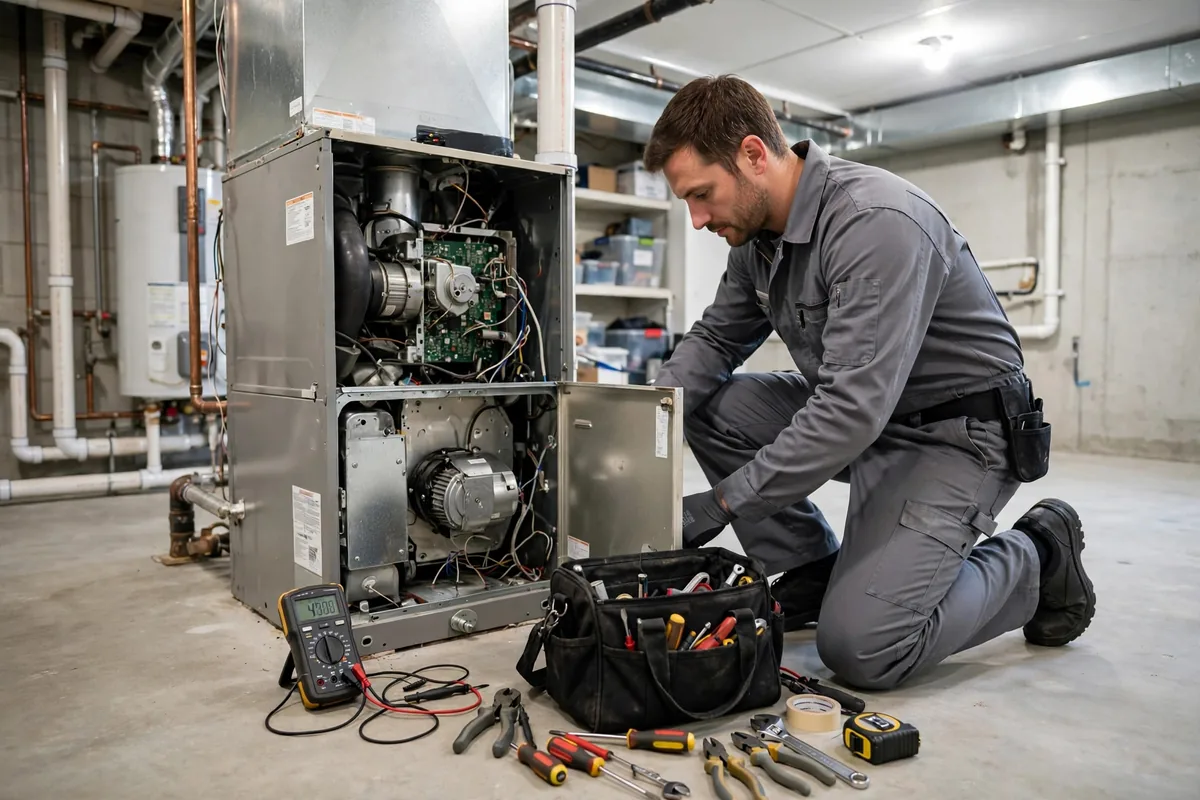
La Mesa furnaces need professional maintenance once a year, ideally in fall before heating season. Yearly service includes cleaning the flame sensor and burners, testing the igniter, checking airflow, and inspecting the heat exchanger. Homeowners should also replace filters every one to three months during use.
Ask a La Mesa homeowner how often their furnace needs maintenance and you will often hear: hardly ever, because it barely runs. That logic feels reasonable in a climate where the heater works maybe three months a year. It is also how furnaces end up failing on the first cold night of December. Infrequent use does not preserve a furnace; in some ways it punishes it. Here is a practical maintenance schedule for San Diego County's East County homes, and what each visit should actually include.
Why Mild Winters Do Not Mean Maintenance-Free
A furnace that sits idle from April to November is not resting gracefully. Dust settles on the flame sensor rod and burner ports during the long cooling season. Capacitors bake in hot garages and attics. Condensate traps dry out. Small rust spots grow on heat exchangers undisturbed. Then the first cold snap arrives, the thermostat calls for heat, and every one of those small problems shows up at once. Technicians see the pattern every December: the no-heat calls cluster in the first two weeks of real heating weather, and a large share trace to neglect, not age.
There is a second, quieter reason: safety controls need verification whether the furnace runs a little or a lot. Limit switches, flame sensing, pressure switches and carbon monoxide safety do not announce when they degrade. Annual testing is the only way to know they will work when needed.
The Schedule: Once a Year, in Early Fall
For La Mesa and the surrounding East County area, the right cadence is one professional tune-up per year, scheduled in early fall. September and October are ideal: the cooling season is winding down, technicians have open schedules, and any parts that need ordering arrive before heating season. Between visits, replace the filter every one to three months during heating season, monthly if you have pets or the home is dusty. Keep a few spare filters in the correct size; the number one preventable furnace failure is a filter that stayed in six months too long.
What a Real Tune-Up Includes
A proper maintenance visit is a checklist, not a glance. Expect the technician to clean and inspect burners and the flame sensor, visually check the heat exchanger, test the blower motor and capacitor, replace the filter, measure temperature rise across the furnace and compare it to the nameplate range, verify thermostat calibration, and test carbon monoxide safety and all limit and safety controls. On gas furnaces, venting and combustion air get checked. On electric systems, heat strip amperage and sequencer staging get tested. The visit typically takes 60 to 90 minutes, and you should receive a written report of findings.
If a tune-up takes twenty minutes and produces no report, it was not a tune-up. Ask what was checked and what the readings were; a good technician will tell you the temperature rise, the capacitor reading and the CO test result without hesitation.
Signs You Are Overdue
Skipped last year? You are overdue now. Beyond the calendar, watch for rising energy use without a change in habits, longer heat-up times, new noises at startup, the furnace cycling more often than it used to, or dust puffing from vents when heat starts. Any of those means the system is compensating for something, and compensation always costs more than maintenance.
Maintenance and Equipment Life
Manufacturers design furnaces around the assumption of regular service; neglected maintenance is the most common reason equipment fails early. Beyond longevity, there is the simple economics: a tune-up costs far less than a single emergency no-heat visit, and it catches the igniters, sensors and capacitors that cause most of those visits. For La Mesa homeowners, the math is straightforward: one fall visit per year, filters on schedule, detectors tested monthly.
What Your Maintenance Report Should Show
After a tune-up, you should receive a written report, and it should contain actual findings, not just a checkmark. Look for the temperature rise measured across the furnace compared against the nameplate range, the capacitor reading, the condition of the igniter and flame sensor, filter status, and the carbon monoxide test result. If anything was marginal, the report should say what and whether it needs action now or at the next visit. Keep these reports year to year: a temperature rise creeping upward or a capacitor reading drifting down tells a story about where the system is headed.
Call (619) 939-1577 in early fall to get on the schedule before the heating season.
Maintenance for Homes With Multiple Systems
Some La Mesa properties run more than one heating system: a main furnace plus a wall furnace in an addition, or separate systems for a main house and a guest unit. Each system needs its own annual service, because each has its own igniter, flame sensor and safeties aging independently. It is tempting to service the main unit and ignore the secondary one, but secondary systems fail just as often, usually when guests are visiting for the holidays. When you schedule the fall tune-up, mention every heating appliance on the property so nothing gets skipped.
Frequently Asked Questions
Is annual maintenance really necessary in San Diego County?
Yes. The mild climate means furnaces sit idle for months, letting dust and corrosion build on ignition parts. Annual service catches that before the heating season, and it keeps safety controls verified.
What is the best month for a furnace tune-up in La Mesa?
Early fall, typically September or October. You beat the first-cold-snap rush, and any parts that need ordering arrive before you need heat.
What can I do myself between professional visits?
Replace the filter on schedule, keep supply and return vents clear and unblocked, keep the area around the furnace clean, and test carbon monoxide detectors monthly. Leave burners, gas parts and electrical testing to the technician.
Need Help With Your Furnace?
If this guide describes what your furnace is doing, the next step is a professional diagnosis. Call (619) 939-1577 and describe the symptoms; FurnaceGuard La Mesa will match you with an independent contractor and schedule the visit.