Furnace Blowing Cold Air? Causes and Next Steps
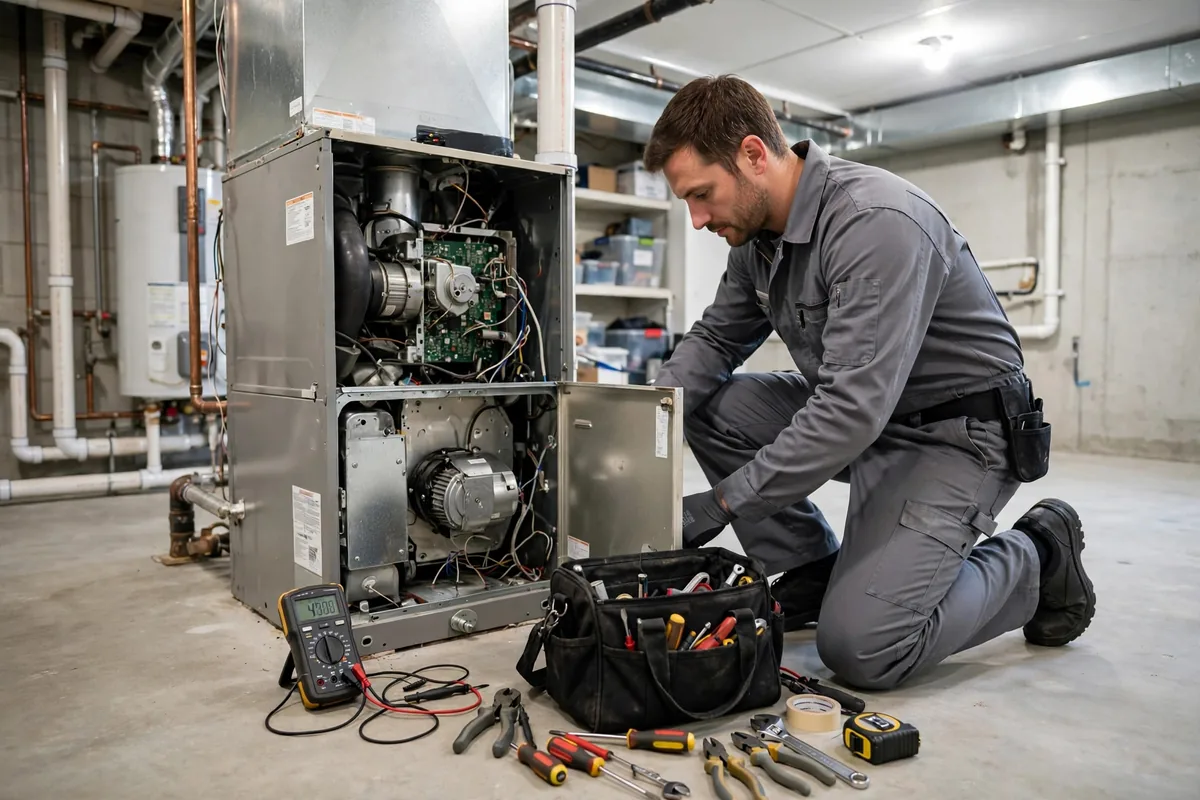
A furnace blowing cold air in La Mesa usually means the burners are not lighting: a failed igniter, dirty flame sensor, or gas supply issue on gas units, or a failed sequencer or element on electric units. Check the thermostat and filter first, then call (619) 939-1577 if the air stays cold.
Cold air from the vents on a chilly La Mesa night is one of the most frustrating furnace symptoms, because the system is clearly trying: the blower runs, air moves, but the house never warms. The good news is that cold-air complaints trace to a short list of causes, and the pattern of the problem usually points straight at the culprit. This guide walks through them in the order a technician would check.
First Check: The Thermostat Fan Setting
Before anything else, look at the thermostat fan setting. If it reads On instead of Auto, the blower runs around the clock, circulating unheated air between heating cycles. The house feels drafty and cool even though the furnace itself may be heating fine during its cycles. Switch the fan to Auto so the blower only runs when the burners or heat strips are producing heat. This single setting accounts for a surprising number of cold-air complaints, and it costs nothing to rule out.
Gas Furnace: Burners Not Staying Lit
On a gas furnace, sustained cold air usually means the burners are not lighting or not staying lit. The classic pattern: the furnace goes through startup, you may hear clicking or the inducer running, but the air from the vents never warms. The most common causes are a cracked hot surface igniter that can no longer light the gas, a flame sensor coated with oxidation that cannot prove flame and shuts the gas valve as a safety response, or a gas valve that is not opening at all.
There is a subtler variant worth knowing: burners that light for a few seconds, then drop out, then try again. That is almost always flame sensing. The sensor rod sits in the burner flame and sends a tiny current to the control board; when oxidation weakens that signal, the board concludes there is no flame and closes the gas valve. Cleaning or replacing the sensor is a routine fix. None of these are homeowner repairs beyond the basic checks, but knowing the pattern helps you describe the problem accurately when you call.
Electric Furnace: Heat Strips Not Energizing
Electric furnaces heat with resistive elements staged on by sequencers. When one or more heat strips fail, the system runs at partial capacity: the blower moves air, but it never gets fully warm. A failed sequencer can leave entire stages off. The tell is lukewarm air that never quite satisfies the thermostat, with the system running long cycles. Amperage testing on each strip identifies the dead ones quickly. If the breaker trips when heat runs, stop resetting it and call: that is the electrical system protecting you from an overload.
Airflow Problems That Feel Like No Heat
Sometimes the furnace is heating fine but the heat never reaches you. A severely clogged filter, closed-off rooms, or a failing blower can reduce airflow so much that the small amount of warm air dissipates before it matters. Worse, low airflow overheats the heat exchanger, trips the limit switch, and shuts the burners down mid-cycle, so the vents alternate between lukewarm and cold. Check the filter first, open the vents, and if airflow at the registers is still weak with a clean filter, the blower assembly needs testing.
Duct Issues in La Mesa Homes
East County's mid-century homes often have original ductwork: leaky connections in hot attics, crushed flex runs, and returns that were undersized from day one. Leaky supply ducts dump heated air into the attic instead of the bedrooms, so the furnace runs constantly while rooms stay cool. Disconnected ducts can even pull cold attic air into the system. If some rooms heat fine while others blow cold, or the system runs endlessly without satisfying the thermostat, duct leakage belongs on the suspect list alongside the equipment itself.
What to Do Next
Run the homeowner checks: fan set to Auto, a clean filter, open vents, and the thermostat actually calling for heat. Note the pattern: does the furnace try to light? Does it light and die? Does it run constantly? Then call (619) 939-1577 with those details. Cold air has a short suspect list, and
Cold Air Right After a Repair or Thermostat Change
If cold air started right after a repair visit or a new thermostat, say so when you call. A wire left on the wrong terminal, a thermostat configured for the wrong equipment type, or a control board setting changed during service can all produce cold air from an otherwise healthy furnace. These are quick corrections once the recent work is known. The timeline is diagnostic gold: problems that begin immediately after someone touched the system usually trace back to that visit.
a proper diagnosis will find it without guesswork.
Frequently Asked Questions
Is cold air from the furnace ever normal?
Briefly, yes: the first minute of a cycle pushes out room-temperature air before the heat exchanger warms up, and defrost cycles on heat pumps blow cool air temporarily. Continuous cold air through a full cycle is not normal.
Could the thermostat fan setting cause this?
Yes. With the fan set to On instead of Auto, the blower runs constantly, pushing unheated air between heating cycles. Switch it to Auto and see if the problem disappears.
Should I keep running a furnace that blows cold air?
Running it will not warm the house and can mask a developing problem like overheating from low airflow. Run the basic checks, then call (619) 939-1577 if it persists.
Need Help With Your Furnace?
If this guide describes what your furnace is doing, the next step is a professional diagnosis. Call (619) 939-1577 and describe the symptoms; FurnaceGuard La Mesa will match you with an independent contractor and schedule the visit.